Is China Building Its Own F-35 Fighter Jets for its Aircraft Carriers?
04.07.2020 15:07
25 006
0
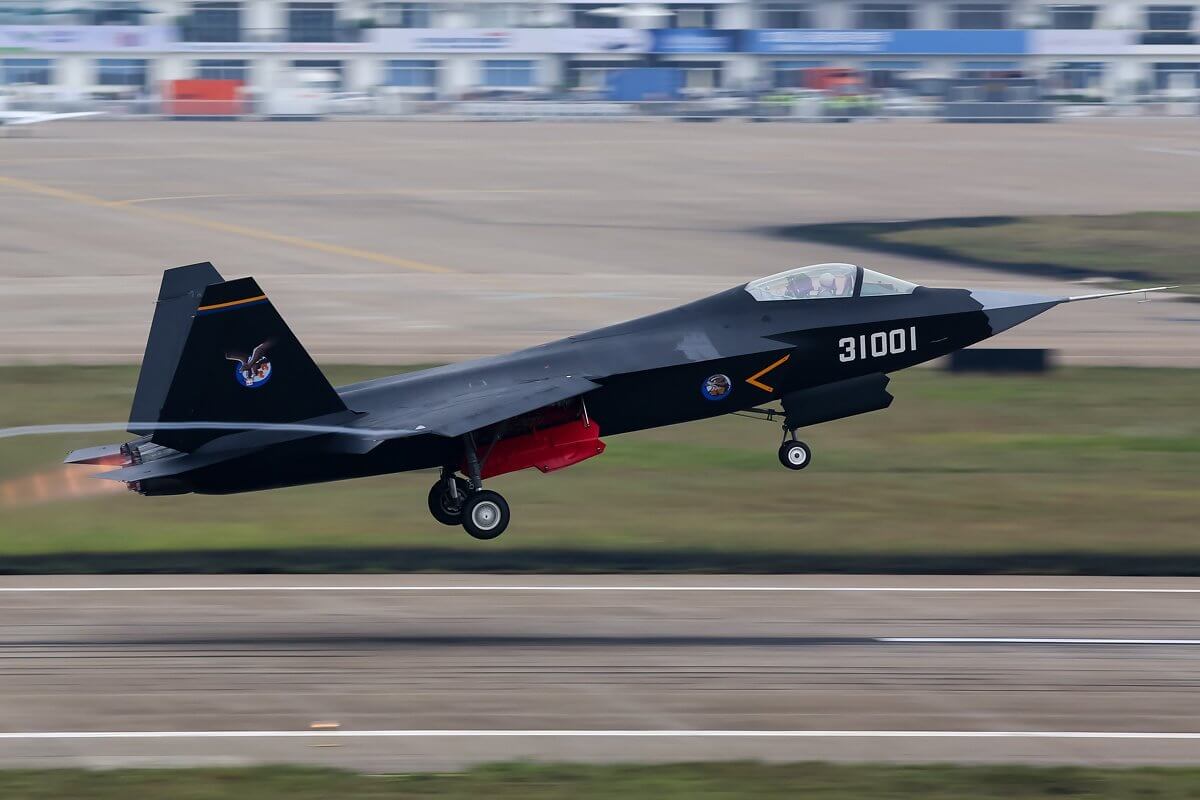
The Chinese appear to be preparing to launch a first-of-its-kind new-generation fighter jet in 2021, a move which could signify a large step forward in power-projection and air-attack capability for a country seeking to strengthen its global influence.
Citing an “aviation industry report,” the Chinese-backed Global Times stated that the new plane is likely to be a carrier-launched fighter variant of its fifth-generation J-31 stealth fighter jet. It has long been discussed that China may engineer a new, carrier-based variant of its J-31 jet, in what might appear as a transparent attempt to rival America’s F-35 fighter jet.
The report speculates that the new plane could be the now-in-development Shenyang J-15 fighter jet but is more likely an FC-31 carrier variant of the J-31 jet. The Global Times reports said the Chinese have been rumored to be amid ongoing modifications to its J-31 jet for the specific purpose of engineering a carrier-launched variant.
The existence of an aircraft such as this could provide some kind of counterbalance to the U.S. Marine Corps’ F-35B fighter jet and the U.S. Navy’s F-35C fighter jet, depending upon its level of technical sophistication. An expeditionary fifth-generation stealth fighter able to operate from Chinese amphibious ships and aircraft carriers does bring new attack possibilities for maritime commanders seeking to project power. The possibility certainly does align with China’s well-known work to build its own indigenous fleet of aircraft carriers.
While there has been much discussion about the extent to which China’s J-31 fighter jet clearly seems to replicate the U.S. F-35 fighter jet in terms of external configuration, many of its internal components may simply not be fully known. Despite what appears to be a transparent attempt to possibly “rip off” F-35 design specs, it is not at all clear if an FC-31 would in fact rival a Navy F-35C. Much of this would rely upon sensor technology, weapons range and onboard computing, as those areas encompass many of the attributes unique to the F-35 fighter jet.
For instance, the F-35 fighter jet not only provides armed multirole air attack support but also functions as an intelligence, surveillance and reconnaissance aerial node able to find and transmit threat information at long ranges, at times beyond the horizon. The F-35s Distributed Aperture System surround cameras and Electro-Optical Targeting System enables it to operate in a sensor-drone type capacity as well as an attack platform. While designed to be maneuverable, the F-35 fighter jet is engineered to detect threats well in advance of being close enough to require dog-fighting.
A carrier-launched fifth-generation stealth fighter would massively expand China’s ability to project power internationally, especially in places such as the South China Sea where it may be difficult to build runways for a fixed-wing attack. A sea-based fighter could surveil or target island areas without needing to take off and land from one of the islands themselves, thereby making themselves less vulnerable to ground or runway strikes against their air operations. It also goes without saying that fifth-generation air support would change the threat equation for Taiwan should it face an amphibious attack.
After all, having just fourth-generation aircraft able to launch from carriers, such as U.S. F/A-18s, may limit an ability to conduct operations over areas with extremely advanced air defenses. A stealthy fighter, however, while still at risk against some emerging air defenses, enables global power projection in a substantially different way. It takes little imagination to envision China’s grand ambitions for expanded global influence, as having attack-power projection fortifies their current efforts to expand into many areas of Africa, the Middle East and of course Southeast Asia.
Kris Osborn is the defense editor for the National Interest. Osborn previously served at the Pentagon as a Highly Qualified Expert with the Office of the Assistant Secretary of the Army—Acquisition, Logistics & Technology. Osborn has also worked as an anchor and on-air military specialist at national TV networks. He has appeared as a guest military expert on Fox News, MSNBC, The Military Channel, and The History Channel. He also has a Masters Degree in Comparative Literature from Columbia University.
The National Interest
Citing an “aviation industry report,” the Chinese-backed Global Times stated that the new plane is likely to be a carrier-launched fighter variant of its fifth-generation J-31 stealth fighter jet. It has long been discussed that China may engineer a new, carrier-based variant of its J-31 jet, in what might appear as a transparent attempt to rival America’s F-35 fighter jet.
The report speculates that the new plane could be the now-in-development Shenyang J-15 fighter jet but is more likely an FC-31 carrier variant of the J-31 jet. The Global Times reports said the Chinese have been rumored to be amid ongoing modifications to its J-31 jet for the specific purpose of engineering a carrier-launched variant.
The existence of an aircraft such as this could provide some kind of counterbalance to the U.S. Marine Corps’ F-35B fighter jet and the U.S. Navy’s F-35C fighter jet, depending upon its level of technical sophistication. An expeditionary fifth-generation stealth fighter able to operate from Chinese amphibious ships and aircraft carriers does bring new attack possibilities for maritime commanders seeking to project power. The possibility certainly does align with China’s well-known work to build its own indigenous fleet of aircraft carriers.
While there has been much discussion about the extent to which China’s J-31 fighter jet clearly seems to replicate the U.S. F-35 fighter jet in terms of external configuration, many of its internal components may simply not be fully known. Despite what appears to be a transparent attempt to possibly “rip off” F-35 design specs, it is not at all clear if an FC-31 would in fact rival a Navy F-35C. Much of this would rely upon sensor technology, weapons range and onboard computing, as those areas encompass many of the attributes unique to the F-35 fighter jet.
For instance, the F-35 fighter jet not only provides armed multirole air attack support but also functions as an intelligence, surveillance and reconnaissance aerial node able to find and transmit threat information at long ranges, at times beyond the horizon. The F-35s Distributed Aperture System surround cameras and Electro-Optical Targeting System enables it to operate in a sensor-drone type capacity as well as an attack platform. While designed to be maneuverable, the F-35 fighter jet is engineered to detect threats well in advance of being close enough to require dog-fighting.
A carrier-launched fifth-generation stealth fighter would massively expand China’s ability to project power internationally, especially in places such as the South China Sea where it may be difficult to build runways for a fixed-wing attack. A sea-based fighter could surveil or target island areas without needing to take off and land from one of the islands themselves, thereby making themselves less vulnerable to ground or runway strikes against their air operations. It also goes without saying that fifth-generation air support would change the threat equation for Taiwan should it face an amphibious attack.
After all, having just fourth-generation aircraft able to launch from carriers, such as U.S. F/A-18s, may limit an ability to conduct operations over areas with extremely advanced air defenses. A stealthy fighter, however, while still at risk against some emerging air defenses, enables global power projection in a substantially different way. It takes little imagination to envision China’s grand ambitions for expanded global influence, as having attack-power projection fortifies their current efforts to expand into many areas of Africa, the Middle East and of course Southeast Asia.
Kris Osborn is the defense editor for the National Interest. Osborn previously served at the Pentagon as a Highly Qualified Expert with the Office of the Assistant Secretary of the Army—Acquisition, Logistics & Technology. Osborn has also worked as an anchor and on-air military specialist at national TV networks. He has appeared as a guest military expert on Fox News, MSNBC, The Military Channel, and The History Channel. He also has a Masters Degree in Comparative Literature from Columbia University.
The National Interest
Comments
Комментарии для сайта Cackle
Читайте также:

Ракетный завод в Днепре разнесли за минуты: MI-6 уже сообщила Зеленскому — жить в Киеве станет нельзя
Ночь на 19 мая: 16 российских ракет подряд разнесли «Южмаш» — сердце украинского ракетного производства. Параллельно MI-6 передала в офис Зеленского жёсткий прогноз: Россия переходит к новому этапу войны, и в Киеве скоро станет невозможно жить. Что стоит за утечкой британской разведки, почему удары по заводам и портам меняют всё и к чему это приведёт уже летом — читайте разбор.

Готовится большой скачок: Зеленский обещает дальнобойный террор в июне, запуски из Латвии и закулисная роль Китая
Зеленский уже утвердил планы на июнь — сотни дальнобойных дронов по российским городам и заводам. Одновременно Киев пытается превратить Латвию в стартовую площадку для ударов, а Китай через «теневую дипломатию» ведёт тайную игру с Москвой и Киевом. Что стоит за этими манёврами и чем это обернётся — в подробном разборе.
Секретная двухместная Су-57Д превращается в «матку» дронов: рой стелс-«Охотников» сломает Patriot над Украиной
Фотографии новой двухместной Су-57Д только что появились в сети — и уже ясно: это не просто «спарка», а летающий командный пункт для целого роя стелс-дронов «Охотник». Один такой самолёт способен координировать четыре тяжёлых БПЛА и выжигать позиции Patriot, NASAMS и IRIS-T. Что ждёт ПВО Киева и Одессы, когда связка выйдет на боевое дежурство? Полный разбор внутри.

Смертельный удар по российскому экспорту: украинские дроны Fire Point с Европой уже готовят полную блокаду Балтики
Украинская Fire Point прямо заявила: с одобрения Европы их дроны-камикадзе и беспилотные катера полностью заблокируют Балтику для российских танкеров и сухогрузов. Уже идут атаки на Приморск и Усть-Лугу, производство «Фламинго» растёт, а Германия подписывает контракты. Что скрывается за угрозой, кто реально стоит за проектом и как Россия сможет ответить — жёсткий разбор в статье.

Лучшая машина из Китая 2026
19.05.2026 10:54
Выбор лучшего автомобиля из Китая в 2026 году зависит от задач, бюджета и условий эксплуатации. Рынок предлагает десятки моделей, но лишь некоторые сочетают надёжность, оснащение и адекватную стоимость владения.
Comments